

 Facebook
 X
X
 Pinterest
 Copy Link
Professional staging helps buyers visualize living in your Cranbury home, improves online listing photos, and may support stronger offers. NAR survey data shows 82% of buyers’ agents say staging aids buyer visualization, though any price effect depends on your specific property, condition, and competition.
Does professional staging help when selling your  NJ home?
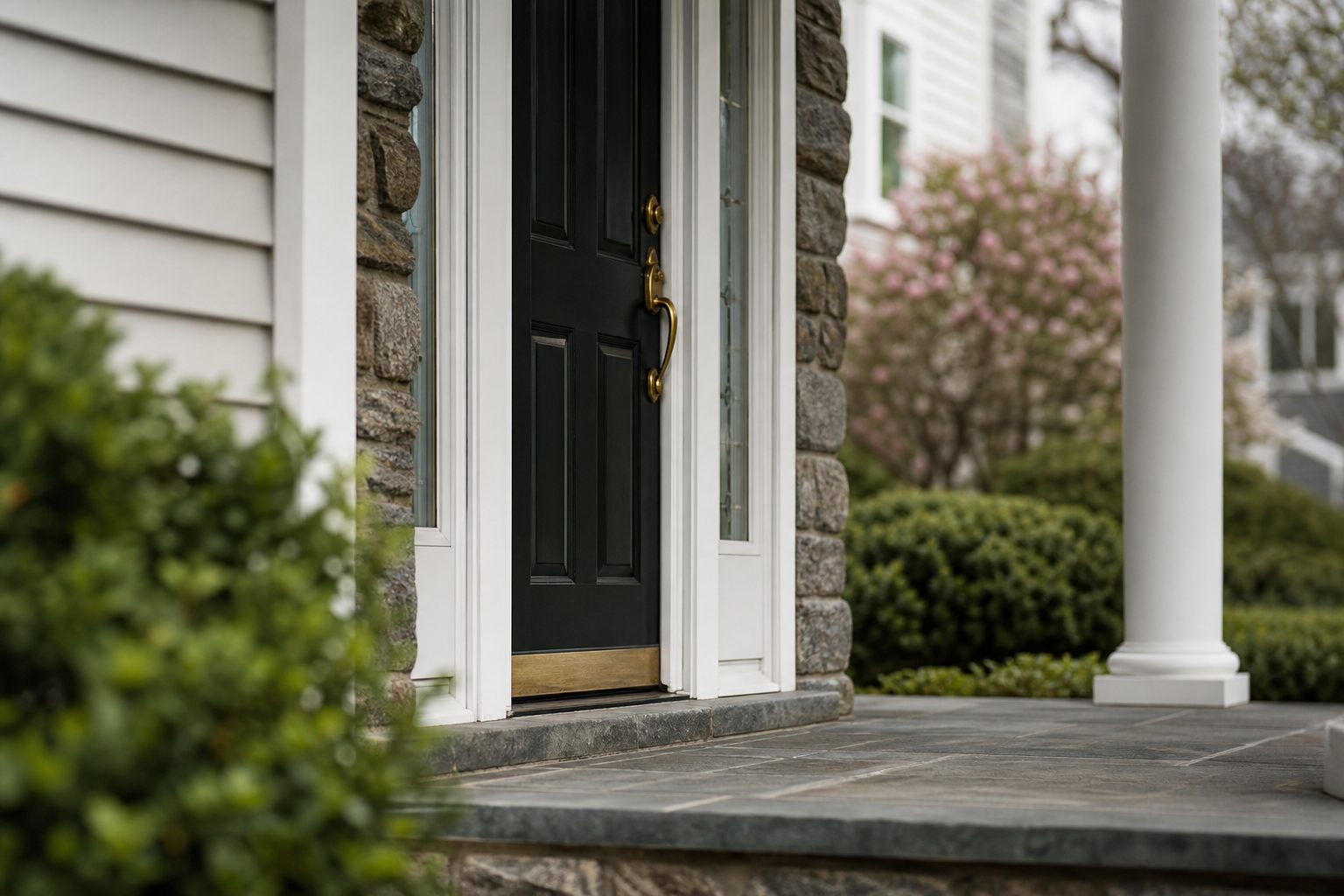 NJ home?
Professional staging helps buyers picture themselves living in your home, which directly affects how they respond during showings and what they’re willing to offer. According to the National Association of REALTORS’ 2025 Profile of Home Staging, 82% of buyers’ agents said staging made it easier for buyers to visualize a property as their future home. Any effect on sale price depends on your specific property, its condition, and the competition around it, but the visualization benefit is consistent and significant.
Key Takeaways
- 82% of buyers’ agents report that staging made it easier for buyers to visualize a property as their future home, according to NAR’s 2025 Profile of Home Staging.
- About 30% of real-estate professionals surveyed by NAR associated staging with a 1%–10% increase in perceived home value, though this is an agent-reported association, not a guaranteed return for any individual property.
- Approximately half of agents surveyed said buyers now expect homes to look like professionally staged television properties, making polished presentation a baseline expectation rather than a bonus.
- Staging works best when it’s completed before professional photography, not after a listing goes live.
- In Cranbury, where new construction is rare and buyers are comparing your home against established inventory, presentation and pricing are the two levers you control most directly.
Why does staging matter so much for selling your Cranbury NJ home?
Selling your Cranbury NJ home starts online. Before a buyer calls their agent to schedule a showing, they’ve already scrolled through your listing photos on their phone. That first impression is either working for you or against you.
Professional staging is how you make it work for you.
According to the NAR’s 2025 Profile of Home Staging, about half of all real-estate agents surveyed said buyers now expect homes to look like the polished properties they see on television. That’s not a niche preference anymore. It’s a baseline expectation. If your listing photos don’t clear that bar, buyers move on before they’ve even considered your price.
I believe every listing deserves professional staging and photography. Presentation is what sells homes, and in a market like Cranbury, where new construction is nearly nonexistent and buyers are comparing your property against established inventory, you can’t afford to leave that first impression to chance.
What staging actually does for a buyer
Staging isn’t decoration. It’s a communication tool. A well-staged room tells a buyer exactly what the space is for, how it functions, and whether their life fits inside it.
Empty rooms look smaller in photographs than they do in person. Oversized or mismatched furniture can obscure circulation paths and make a room feel cluttered even when it isn’t. The right furniture scale and placement opens the space up, draws the eye to architectural features, and lets natural light do its job.
That’s especially true in Cranbury’s older and more architecturally distinctive homes, where rooms may have proportions or layouts that buyers haven’t seen before. Staging clarifies those spaces rather than leaving buyers to guess how they’d use them.
The rooms that matter most
Not every room needs the same level of attention. Secondary reporting on NAR’s 2025 staging data identifies the living room as the most frequently emphasized space, followed by the primary bedroom, dining area, and kitchen. That tracks with what I see in practice.
For a Cranbury listing, I’d add the entry and any distinctive outdoor or architectural feature to that priority list. The entry sets the tone the moment a buyer walks through the door, and an inviting outdoor space can genuinely extend a home’s perceived square footage in a buyer’s mind.
The exact priority depends on your home’s layout, condition, and what you’re competing against. That’s a conversation I have with every seller before we finalize the staging plan.
Room or Space Why It Gets Priority Key Staging Goal Living Room Most-photographed, first impression inside the home Clear function, comfortable scale, natural light Primary Bedroom High emotional weight for buyers Calm, restrained design that reads as a retreat Kitchen Major decision driver; buyers linger here Clear counters, edited accessories, clean lines Entry / Foyer Sets the tone within seconds of arrival Welcoming, uncluttered, signals care for the home Dining Area Helps buyers visualize entertaining and daily life Properly scaled furniture, defined purpose Outdoor / Distinctive Features Differentiates your listing from competing homes Clean, intentional, photographable
How does staging fit into the listing timeline?
The sequence matters as much as the staging itself. A common mistake is treating staging as something you do after the listing goes live, or right before the first open house. By then, the damage is already done. Buyers who saw the unstaged photos have already moved on.
Here’s the order I walk my clients through:
- Staging consultation and room-by-room plan. Before anything else, a professional stager or your agent walks the home with fresh eyes and identifies what stays, what goes, and what needs to be added or rented.
- Decluttering and repairs. Staging can’t fix deferred maintenance, and it shouldn’t try to. Address anything that would show up on an inspection or distract a buyer from the home’s strengths. Staging is for presentation, not concealment.
- Deep cleaning and exterior presentation. The exterior is the first thing buyers see when they pull up. It needs to match the quality of what’s inside.
- Furniture installation and accessory placement. This is where rented furnishings, artwork, textiles, and curated accessories come in, particularly for vacant homes or rooms where the existing furniture doesn’t serve the space well.
- Professional photography. The home should be visually complete before the photographer arrives. Photos taken in a half-staged home are photos that can’t be retaken once the listing is live.
- Showings and open houses. Now buyers arrive to a home that matches or exceeds what they saw online.
If you’re wondering whether your listing is getting the attention it deserves, the post Are Buyers Avoiding Your Listing? walks through some of the most common reasons a home sits, and presentation is near the top of that list.
Staging an occupied home vs. a vacant home
These are genuinely different projects. An occupied home already has furniture and personal items, so the work is mostly about editing: removing what competes with the space, repositioning what helps it, and adding targeted pieces where the existing furnishings fall short.
A vacant home needs more. Empty rooms photograph poorly, feel smaller than they are, and give buyers nothing to anchor their imagination to. Rented furnishings and accessories do real work here, particularly in a distinctive Cranbury property where the room proportions may be unfamiliar to buyers coming from newer construction.
The cost structure is different too. A consultation and occupied-home styling, furniture rental, delivery, installation, removal, and any extension charges are all separate line items. Get a written proposal from a local staging company that breaks those out clearly, so you’re comparing apples to apples.
Does staging guarantee a higher sale price?
The honest answer is: it can support one, but nothing is guaranteed.
In the NAR’s 2025 Profile of Home Staging, about 30% of real-estate professionals reported that staging was associated with a 1%–10% increase in perceived home value. In the same survey, 19% of listing agents reported that staging increased offers by 1%–5% over comparable unstaged homes, and 10% reported an increase of 6%–10%. These are agent-reported associations, not controlled experiments, and they don’t translate into a guaranteed premium for any individual property.
What the data does support clearly is that staging improves how buyers experience and remember your home. That matters at every price point, and it matters especially when a buyer is choosing between two otherwise similar listings.
Your specific situation depends on your home’s condition, its location within the Cranbury and Greater Princeton area, the competing listings at the time you go live, and your target buyer. That’s exactly why I don’t apply a one-size-fits-all staging formula. The right plan comes from understanding your property and your market position. Pair that with knowing how to price your home to sell at the right number from day one, and you’re working both levers that sellers control most directly.
Frequently Asked Questions
Is professional home staging worth it when selling a house in Cranbury, NJ?
For most Cranbury sellers, yes. The NAR’s 2025 Profile of Home Staging found that 82% of buyers’ agents said staging made it easier for buyers to visualize a property as their future home, and about half of agents said buyers now expect homes to look like professionally staged properties. In a market where new construction is scarce and buyers are comparing your home against established inventory, presentation is one of the few variables you can control directly. Whether the investment makes sense for your specific property is worth discussing before you commit.
Does staging actually increase the sale price of a Cranbury home?
Staging can support stronger offers, but it doesn’t guarantee a specific price increase on any individual property. According to NAR’s 2025 staging survey, 19% of listing agents reported that staging increased offers by 1%–5% over comparable unstaged homes, and 10% reported an increase of 6%–10%. These are agent-reported associations, not controlled findings, and the real-world effect depends on your home’s condition, competition, and buyer pool. The clearest benefit is that staging improves buyer visualization, which keeps more buyers engaged long enough to make an offer.
Should I stage the entire house or only the main rooms?
Focus your staging budget on the rooms buyers spend the most time in and that photograph most prominently: the living room, primary bedroom, kitchen, entry, and dining area. Secondary spaces like guest rooms, laundry rooms, and utility areas generally don’t need the same level of attention. The right scope depends on your home’s layout and what will have the most impact on your specific listing photos and showing experience.
Is professional staging different from decluttering and cleaning?
Yes, they’re separate steps, and both matter. Decluttering and cleaning are preparation work that every home needs before it goes on the market. Professional staging goes further: it involves deliberate furniture placement, scaled furnishings (rented if needed), curated accessories, and a design plan that helps buyers visualize the space as their own. Staging without cleaning and decluttering first undermines both efforts, which is why I treat them as sequential steps in the listing timeline rather than interchangeable tasks.
When should staging be completed before professional real-estate photography?
Staging should be fully complete before the photographer arrives, not after the listing goes live. Once your listing photos are published, buyers form opinions within seconds, and those first impressions are very difficult to reverse. The practical sequence is: consultation and plan, decluttering and repairs, deep cleaning, staging installation, photography, then showings. Rushing photography before staging is done is one of the most common and costly mistakes I see sellers make.
The bottom line for Cranbury sellers
Selling your Cranbury NJ home well means giving buyers a clear, compelling picture of what their life looks like inside it. Professional staging is how you do that deliberately, before the first photo is taken and the first buyer walks through the door.
If you’re getting ready to list and want a room-by-room staging plan built around your specific home and the current market, I’d love to walk through it with you. Schedule a consultation and we’ll start with what your home needs most, or if you’re curious what your property is worth right now, request a free home evaluation and I’ll put together a current market analysis for you.
About Deanna Anderson
Deanna Anderson is a REALTOR® with Coldwell Banker Realty serving Princeton, NJ and Central New Jersey, and a member of Coldwell Banker’s International President’s Elite. She helps clients buy and sell homes with careful planning, staging, and constant communication, drawing on her own experience as a parent of a young adult with special needs to guide families with unique housing needs.
Coldwell Banker Realty · (609) 462-3983
This article is general information only and does not constitute legal, tax, or financial advice. Confirm your specific numbers and transaction details with your closing agent, tax advisor, or lender. Equal Housing Opportunity. Deanna Anderson, Realtor/Associate, licensed by the New Jersey Real Estate Commission.


