

 Facebook
 X
X
 Pinterest
 Copy Link
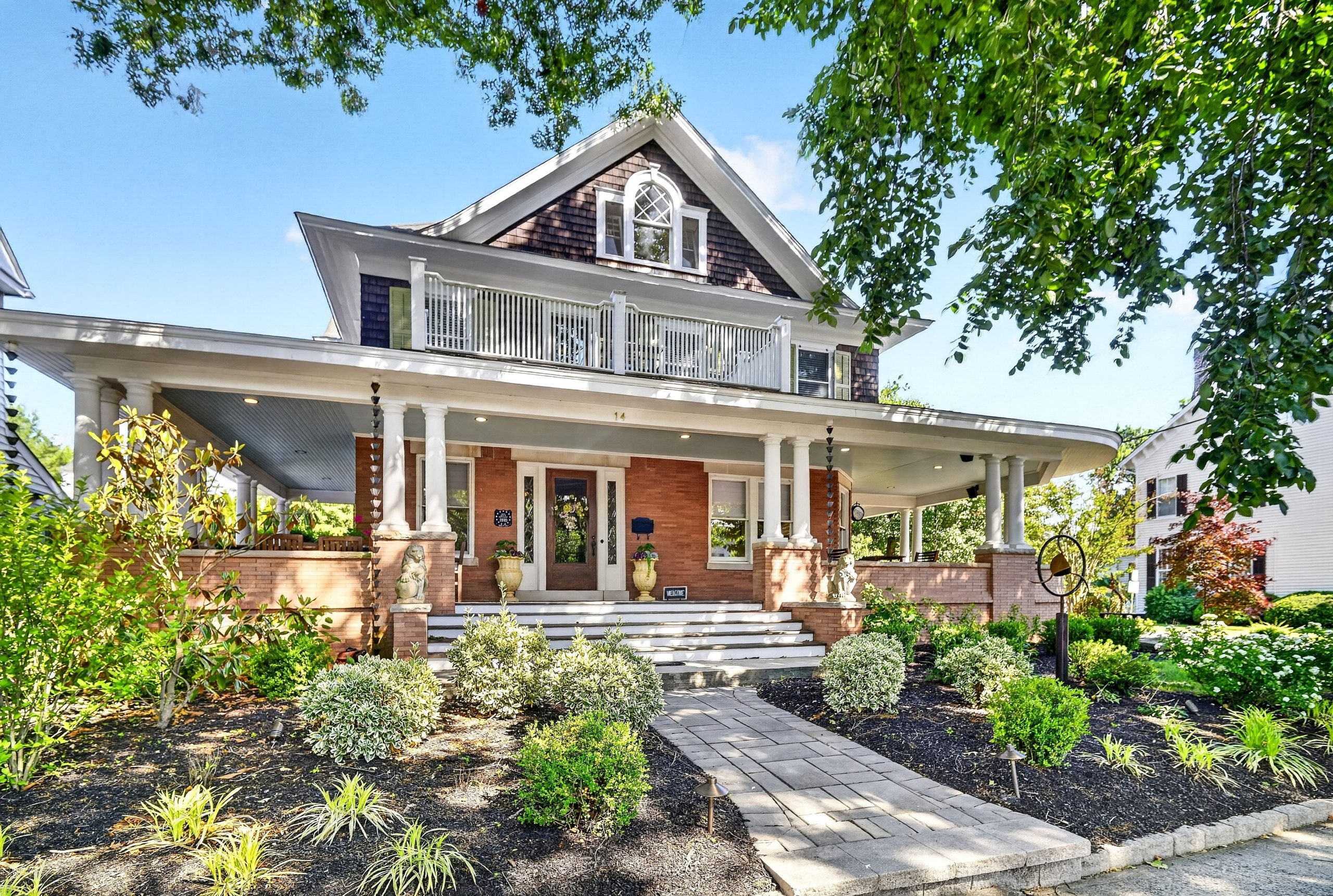 Cranbury, NJ is a small, historic township in Middlesex County with a preserved village center, strong regional highway access, and a two-school public education path. Its low density, community character, and proximity to Princeton and major corridors make it a distinctive choice for first-time buyers willing to drive to work.
Is Cranbury, NJ a good place for first-time homebuyers?
Cranbury is a small, historically protected township in Middlesex County with roughly 3,821 residents and approximately 13.3 square miles of land. For first-time buyers who want a genuine small-town feel within commuting distance of Princeton, New York City, and Philadelphia, it offers something hard to find anywhere else in Central New Jersey. The trade-off is real: this is a car-dependent community, inventory is limited, and the housing market reflects the area’s desirability.
Key Takeaways
- Cranbury Township covers approximately 13.3 square miles with a population of about 3,821, giving it one of the lowest densities in the Greater Princeton corridor at roughly 287.7 people per square mile.
- Most of Cranbury’s historic village is listed on both the New Jersey Register of Historic Places (1979) and the National Register of Historic Places (1980), which limits new construction and shapes the community’s character.
- Public school students attend Cranbury School for pre-K through eighth grade, then transition to Princeton High School through a formal sending/receiving relationship with Princeton Public Schools.
- About 75% of Cranbury residents drive alone to work, according to the 2026 Cranbury Bicycle Network Plan, so first-time buyers should plan around car ownership from day one.
- Because new construction in Cranbury is nearly nonexistent, buyers compete for a small pool of resale homes, and preparation before making an offer matters more here than in higher-inventory markets.
What makes Cranbury different from other Greater Princeton towns?
I work across the Greater Princeton area, and I tell every first-time buyer who asks about Cranbury the same thing: this place is genuinely different. It is not a suburb in the conventional sense. It is a township that has deliberately preserved its historic character, and that decision shapes everything from what you can build to what the streetscape looks like on a Tuesday afternoon.
Most of the village center is listed on both the New Jersey and National Registers of Historic Places, designations that go back to 1979 and 1980 respectively. That protection means the village looks and feels the way it has for generations. It also means that the supply of homes in the heart of the village is fixed and small.
The broader township, outside the village core, includes more residential and rural land. So when buyers picture Cranbury, they should hold two images at once: the preserved village center with its walkable main street, and the quieter, lower-density residential areas that surround it. Both are part of the same township, but they feel different on the ground.
How does Cranbury compare to Princeton, Plainsboro, or West Windsor?
Each of those communities has its own character, housing stock, commercial infrastructure, and school arrangements. Cranbury’s defining attributes are its smaller scale, historic village setting, and highway access. Princeton has a larger commercial and cultural center and its own school district. Plainsboro and West Windsor offer more recently developed housing and different transit options. I’d encourage any buyer comparing these towns to visit each one rather than rely on descriptions alone, because the feel of a place is something you have to experience in person.
What does the community offer day-to-day?
The village center is walkable in the way that small historic towns are: you can stroll to local shops, restaurants, and the green. The Cranbury Public Library is part of the Middlesex County library system and serves township residents. The Cranbury Historical and Preservation Society operates the Cranbury Museum and History Center, which connects residents to the township’s long history as an 18th-century stop between New York and Philadelphia.
For everyday errands, most residents drive to nearby commercial centers in East Windsor, South Brunswick, or Princeton. That is not a criticism of Cranbury; it is simply the honest picture of what life here looks like, and first-time buyers should factor it into their decision.
How does getting around Cranbury actually work?
Plan to drive. The 2026 Cranbury Bicycle Network Plan, produced by the North Jersey Transportation Planning Authority, found that 75% of residents drive alone to work. That figure reflects the reality of a township with approximately four miles of the New Jersey Turnpike/I-95 corridor running through it, plus access to U.S. Route 130 and County Routes 535, 539, 615, and 614.
The good news for commuters is that the highway access is genuinely strong. Turnpike Exits 8 and 8A are in neighboring municipalities but are close enough to make Cranbury a practical base for driving to jobs in the Princeton corridor, the Route 1 tech belt, or further afield toward New York or Philadelphia. Buyers who work remotely or have flexible schedules will find the location especially well-suited to their needs.
If you are counting on rail or bus transit as your primary commute option, Cranbury is not the right fit. That is an honest trade-off, and it is worth knowing before you fall in love with a listing.
Commute Attribute Cranbury Detail Primary commute mode 75% drive alone (2026 NJTPA report) Major highway access NJ Turnpike/I-95, U.S. Route 130 County routes 535, 539, 615, 614 Nearest Turnpike exits Exit 8 and Exit 8A (neighboring municipalities) Transit orientation Car-dependent; limited transit infrastructure
What should first-time buyers know about schools and the buying process in Cranbury?
The school path in Cranbury is a two-stage arrangement that surprises some buyers. Students attend Cranbury School for pre-kindergarten through eighth grade. For high school, grades 9 through 12, Cranbury students attend Princeton High School through a formal sending/receiving relationship with Princeton Public Schools. Cranbury School received National Blue Ribbon recognition for the 2016-17 school year, which is a meaningful historical distinction.
If schools are a central factor in your decision, I always recommend confirming current enrollment, transportation, and program details directly with both districts before you make an offer. School arrangements can evolve, and you want current information, not what was true two years ago.
What does buying a home in Cranbury actually look like?
The pool of available properties at any given time is small. While there is a small development of new homes on Arthur Lane, most of the market is resale. When a home comes to market in the village or in the broader township, buyers who are prepared move faster and win more often than buyers who are still figuring out their financing or their priorities.
I walk every first-time buyer I work with through the same preparation sequence before we start touring: get pre-approved, clarify your must-haves versus nice-to-haves, and understand what you are actually competing for in this specific market. If you want a deeper look at the questions most first-time buyers ask before they are ready to offer, I put together a resource on the most common home buyer questions that covers the fundamentals.
When you are ready to write an offer, the preparation you did upfront is what gives you confidence. I also have practical guidance on writing a competitive offer that applies directly to low-inventory markets like Cranbury.
Your specific timeline and budget will depend on your financing, the condition of the home, and what else is active in the market when you are ready. That is exactly the kind of question I work through with buyers one-on-one, because the answer is never the same twice.
Frequently Asked Questions
Is Cranbury, NJ a good place for first-time homebuyers?
Cranbury is a strong fit for first-time buyers who want a small, historic community with good highway access and are prepared to drive for most daily needs. The housing supply is limited because new construction is nearly nonexistent, so buyers need to be financially ready and decisive when a home comes to market. The community’s preserved character and low density are genuine draws, but the car-dependent lifestyle and competitive inventory are honest trade-offs to weigh.
Which schools do Cranbury children attend?
Cranbury students attend Cranbury School for pre-kindergarten through eighth grade, then transition to Princeton High School for grades 9 through 12 under a sending/receiving relationship with Princeton Public Schools. Families should contact both districts directly to confirm current enrollment procedures, transportation arrangements, and programming before making a purchase decision.
Does Cranbury have a walkable downtown or village center?
Yes, the historic village center is walkable and includes local shops, restaurants, and a village green. Most of the village is listed on the National Register of Historic Places, which protects its character and limits new development. For larger errands and retail, most residents drive to commercial centers in neighboring communities.
How far is Cranbury from Princeton, New York City, and Philadelphia?
Cranbury sits roughly between Princeton and the New Jersey Turnpike corridor, making it accessible to both. The township has approximately four miles of the Turnpike/I-95 corridor, with Exits 8 and 8A in neighboring municipalities providing access north toward New York and south toward Philadelphia. Exact drive times vary by traffic and specific destination, so I recommend testing your actual commute route before committing to a home.
Is Cranbury a quiet, rural community or a suburban one?
Cranbury is best described as a low-density historic township rather than a conventional suburb. The village center has a small-town, walkable quality, while the broader township includes residential and rural land at a population density of roughly 287.7 people per square mile. It does not have the commercial density or transit infrastructure of larger suburban communities, which is part of its appeal for buyers who want a quieter setting without being far from regional employment centers.
Cranbury is one of those places that rewards buyers who take the time to understand it on its own terms. If the combination of a preserved historic village, low density, and strong highway access sounds like the right fit for where you are in life, the next step is getting a clear picture of what is available and what it will take to compete for it.
I would love to walk you through the Cranbury market and help you figure out whether it is the right match for your goals. Schedule a consultation and we will start there.
About Deanna Anderson
Deanna Anderson is a REALTOR® with Coldwell Banker Realty serving Princeton, NJ and Central New Jersey, and a member of Coldwell Banker’s International President’s Elite. She helps clients buy and sell homes with careful planning, staging, and constant communication, drawing on her own experience as a parent of a young adult with special needs to guide families with unique housing needs.
Coldwell Banker Realty · (609) 462-3983
Equal Housing Opportunity. Deanna Anderson is licensed in New Jersey as a Realtor/Associate, regulated by the New Jersey Real Estate Commission. This article is general information only and is not legal, tax, or financial advice. Confirm all details relevant to your transaction with your closing agent, tax advisor, or lender.


